How to Buy a Home With $0 Down
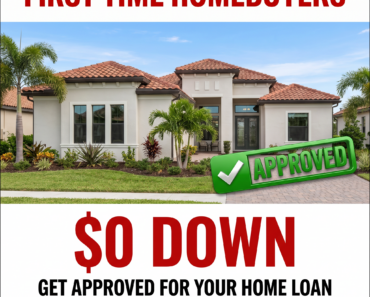
The conventional wisdom that you need a 20% down payment to buy a home is largely a myth. While a larger down payment has advantages — lower monthly payments, no mortgage insurance, better rates — it is absolutely not required. Several federal programs, and dozens of state and local initiatives, allow qualified buyers to purchase a home with little to nothing down.
The catch? Most zero-down programs have eligibility requirements tied to military service, income limits, geography, or occupation. But if you qualify for even one program, you could be a homeowner without writing a six-figure check at closing.
Federal Zero-Down Programs
1. VA Loan — 0% Down
Offered by: U.S. Department of Veterans Affairs
The gold standard of zero-down loans, available to active-duty service members, veterans, and eligible surviving spouses. No private mortgage insurance (PMI) required, competitive interest rates, and no loan limits for most borrowers. A one-time VA funding fee (1.25%–3.3%) applies but can be rolled into the loan.
- Military/veteran eligibility required
- No PMI
- No loan limit (in most cases)
- Primary residence only
2. USDA Rural Development Loan — 0% Down
Offered by: U.S. Department of Agriculture
Designed for low-to-moderate income buyers purchasing in eligible rural and suburban areas. Despite the “rural” label, many suburbs and small cities qualify — about 97% of U.S. land area is eligible. Requires an upfront guarantee fee (1%) and annual fee (0.35%), both much lower than FHA’s mortgage insurance premium. Income limits apply and vary by county and household size.
- Income limits apply
- Geographic restrictions (must be eligible area)
- Primary residence only
- No PMI
3. Navy Federal Credit Union HomeBuyers Choice — 0% Down
Offered by: Navy Federal Credit Union
A conventional (non-government) zero-down mortgage offered exclusively to Navy Federal members — which includes all branches of the military, DoD employees, and family members. No PMI despite zero down payment. Loan limits apply (conforming limit), and the rate may be slightly higher than a standard conventional loan.
- NFCU membership required
- No PMI
- Subject to conforming loan limits
State, Local & Employer-Based Programs
4. State Housing Finance Agency (HFA) Programs — 0–3% Down
Offered by: Your state’s Housing Finance Agency
Every state has a Housing Finance Agency that offers down payment assistance (DPA) grants or second mortgages — often forgivable — that can cover the entire down payment on an FHA, VA, or conventional loan. Florida’s “Florida Assist” and “Florida Hometown Heroes” programs, for example, offer up to $35,000 in zero-interest, deferred loans to eligible buyers. Income limits, purchase price caps, and first-time buyer requirements are common.
- Income limits vary by state and program
- Often restricted to first-time buyers
- Some grants are fully forgivable
- Search your state’s HFA website for current offerings
5. HUD-Approved Local Down Payment Assistance Programs
Offered by: City and county governments, nonprofits
Thousands of city and county programs offer grants or soft second mortgages to help low-to-moderate income buyers. Some are targeted at specific professions — teachers, nurses, firefighters, police officers — through programs like HUD’s Good Neighbor Next Door, which offers 50% off the list price of certain homes for eligible public servants who commit to living there for 36 months. Use HUD’s local homebuying resources tool to find options in your area.
- Occupation-based options available (teachers, first responders, nurses)
- Grant or forgivable loan format
- Location-specific — check your city and county
6. Employer-Assisted Housing (EAH)
Offered by: Large employers as an employee benefit
Many large employers — hospitals, universities, corporations — offer housing assistance as an employee benefit, including down payment grants, forgivable loans, or below-market second mortgages. Some programs are tied to buying near the employer’s campus. Check with your HR department; this benefit is often underutilized. Combined with a state DPA grant, employer assistance can bring your out-of-pocket costs to zero.
- Employment-based eligibility
- Often stackable with state DPA programs
- Ask your HR department — many employees never know it exists
What You Still Need to Bring
Zero down doesn’t mean zero preparation. Here’s what lenders will still require:
- Credit score: VA loans have no minimum, but most lenders want 620+. USDA requires 640+ for automated approval. State DPA programs often require 620–640 minimum.
- Debt-to-income ratio (DTI): Most programs cap total DTI at 41–45%. Your monthly debts (including the new mortgage) can’t exceed about 43% of gross monthly income.
- Closing costs: Zero down ≠ zero at closing. Expect 2–5% of the purchase price in closing costs. However, seller concessions, lender credits, or DPA grants can cover these too.
- Homebuyer education: Most DPA and state programs require a HUD-approved homebuyer education course (typically 6–8 hours online, under $100). Required before closing.
- Reserves: Some programs require 1–2 months of mortgage payments in savings after closing. This proves you can handle an unexpected expense without defaulting.
- Stable income: Lenders want 2 years of documented employment (W-2 or self-employed tax returns). Part-time income and gig work can count with proper documentation.
The Honest Trade-Offs
Zero-down loans come with real trade-offs to understand before you sign:
- No starting equity: You begin with zero equity, leaving you vulnerable to being “underwater” if home values dip.
- Higher monthly payment: Your payment will be higher than if you’d put money down.
- Fees still apply: VA loans have a funding fee; USDA loans have a guarantee fee. Both can be rolled into the loan but add to your total balance.
- Recapture provisions: Some DPA grants become repayable if you sell or refinance within a set period (typically 3–10 years). Always review the recapture terms before closing.
Your Next Steps
- Confirm which federal program you qualify for — VA (military/veteran), USDA (rural/suburban with income limits), or neither.
- Visit your state’s HFA website and ask about current DPA programs with forgivable or grant options.
- Check your city and county for local down payment assistance programs, especially if you’re a teacher, first responder, or healthcare worker.
- Ask your employer’s HR department if any housing assistance benefit exists.
- Get pre-approved with a lender that specializes in your target program — not all lenders participate in all DPA programs.
- Stack programs when allowed — combining a state DPA grant with an FHA or USDA loan can bring your total out-of-pocket costs to zero.
See How Much You Can Qualify for on Your New Home
Program availability, income limits, and loan terms change frequently. Verify current program details directly with your state’s Housing Finance Agency, HUD, or a HUD-approved housing counselor (800-569-4287). This article is for informational purposes and does not constitute financial or legal advice.